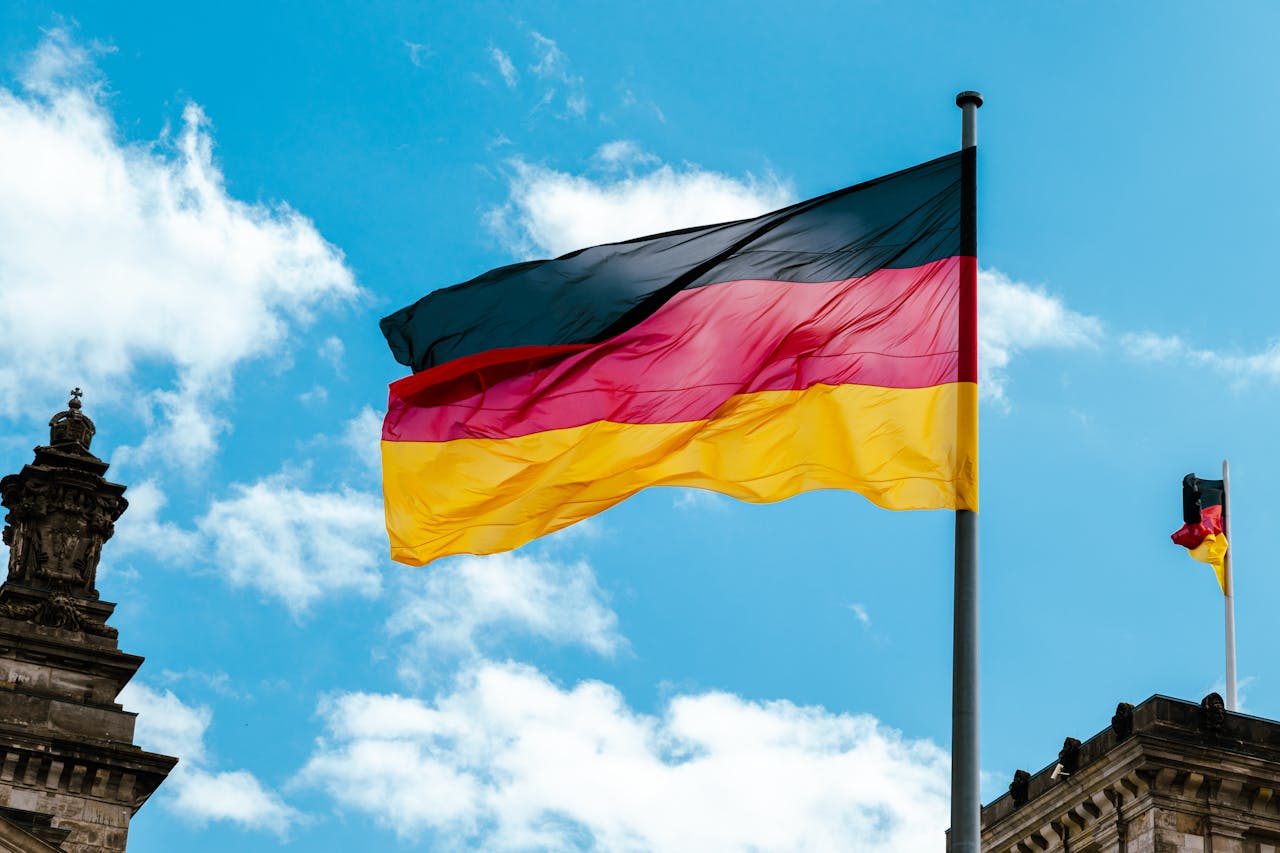
Moving to Germany is a big step. Whether you came from Kenya, Nigeria, Ghana, South Africa, Ethiopia, or anywhere else on the African continent, settling into life in Germany means learning many new things. One of the most important things to understand is the German social security system.
Germany has one of the strongest and most organized social security systems in the world. As an African expatriate working or living in Germany, you are part of this system. You contribute to it, and you also benefit from it. This article will explain everything you need to know in simple, clear language.
You will never be happy if you continue to search for what happiness consists of. You will never live if you are looking for the meaning of life.Albert Camus
We will cover what the system is, how it works, what benefits you can get, how much you pay, and what to do as a newcomer from Africa. We also include links to official German government websites so you can verify the information and apply directly.
directly.
1. What Is the German Social Security System?
The German social security system is called the “Sozialversicherungssystem.” It is a set of government programmes that protect people when life gets difficult. Think of it as a safety net. When you get sick, lose your job, grow old, have children, or need long-term care, the system steps in to help you financially.
Germany has had this system since the 1880s, when Chancellor Otto von Bismarck first introduced it. It is one of the oldest and most developed systems in the world. Today, it covers almost every person who works or lives in Germany, including foreigners and expatriates from Africa.
The system is built on one simple principle: everyone who earns money contributes a small percentage of their salary. The money is pooled together. When someone needs help, the pool pays out. Both you and your employer contribute. This way, the cost is shared and the benefit is widespread.
2. The Five Pillars of German Social Security
The German social security system is divided into five main areas. Each one covers a different part of life. As an employee in Germany, you automatically contribute to all five.
2.1 Statutory Health Insurance (Gesetzliche Krankenversicherung – GKV)
Health insurance is mandatory in Germany. Every person living in Germany must have health insurance. If you are employed and earn below a certain income level, you are automatically enrolled in the public health insurance system, called the GKV.
In 2025, the general health insurance contribution rate is 14.6% of your gross salary. There is also an additional contribution that each health insurance fund sets individually. In 2025, the average additional contribution rate is 2.5%, making a total average of about 17.1%. This is split equally between you and your employer. So you each pay roughly 8.55%.
The income ceiling for health insurance contributions in 2025 is €66,150 per year (about €5,512.50 per month). You do not pay contributions on income above that level.
As an African expatriate, one of the most reassuring things about German health insurance is that your family members can be covered for free under your insurance. Your spouse and children who do not have their own income are automatically covered under your policy at no extra cost. This is called “family insurance” (Familienversicherung).
Some of the biggest public health insurance providers in Germany include TK (Techniker Krankenkasse), AOK, Barmer, and DAK. They all offer similar basic benefits, but may differ in extra services.
Official resource: www.gkv-spitzenverband.de
2.2 Pension Insurance (Rentenversicherung)
Pension insurance is Germany’s retirement savings programme. Every employed person in Germany must contribute to the pension fund. When you retire, you receive monthly pension payments based on how much you contributed during your working life.
In 2025, the pension insurance contribution rate is 18.6% of your gross salary. This is split equally: you pay 9.3% and your employer pays 9.3%. The income ceiling for pension contributions in 2025 is €96,600 per year (or €8,050 per month). You do not pay contributions above this ceiling.
The standard retirement age in Germany is being gradually increased to 67 years. If you were born in 1960, for example, you would retire at 66 years and 4 months.
Important for African expatriates: If you have worked in Germany and then return to your home country in Africa, you can apply to get your German pension contributions refunded. This is possible if you have contributed for less than five years and are not an EU citizen. You must wait at least 24 months after leaving Germany before applying for the refund. The application is submitted to the Deutsche Rentenversicherung (German Pension Insurance).
In 2025, monthly pensions increased by 3.5% starting July 1st, offering retirees better financial stability in the face of rising living costs.
Official resource: www.deutsche-rentenversicherung.de
2.3 Unemployment Insurance (Arbeitslosenversicherung)
Germany’s unemployment insurance protects you if you lose your job. Both you and your employer contribute 1.3% each (totalling 2.6%) of your gross salary. The income ceiling for unemployment contributions in 2025 is the same as pension insurance: €96,600 per year.
If you become unemployed, you can apply for Arbeitslosengeld (unemployment benefit). To qualify, you must have paid contributions for at least 12 months out of the last 30 months. You must also register with the Bundesagentur für Arbeit (Federal Employment Agency) as a jobseeker immediately.
Unemployment benefit in Germany is generally paid at 60% of your previous net salary (or 67% if you have children). The duration of payment depends on how long you contributed. The minimum period is 6 months and the maximum is 24 months.
Tip for African expatriates: Register with the employment agency at least three months before your contract ends. If you wait until after your contract ends, you may face a penalty period before payments begin.
Official resource: www.arbeitsagentur.de
2.4 Long-Term Care Insurance (Pflegeversicherung)
Long-term care insurance covers the cost of professional care when you are no longer able to care for yourself due to old age, disability, or serious illness. This type of insurance was introduced in Germany in 1995.
In 2025, the contribution rate is 3.6% of your gross salary if you have children. If you are childless and over 23 years old, you pay 4.2%. The contribution is split: employees pay a slightly higher share, while employers pay 1.7%.
Long-term care insurance is automatically included if you have statutory health insurance. You do not need to apply separately.
Official resource: www.bundesgesundheitsministerium.de
2.5 Accident Insurance (Unfallversicherung)
Accident insurance covers work-related accidents and occupational diseases. This is one area where you do not pay anything. Your employer pays the full contribution. It is handled by the Berufsgenossenschaft (Employers’ Accident Insurance Association), which varies by industry.
If you are injured at work or suffer from a work-related illness, accident insurance covers your medical treatment, rehabilitation, and if necessary, a disability pension.
3. Summary of Contribution Rates in 2025
Here is a clear overview of the social security contribution rates in Germany for 2025. These numbers are the same whether you are German or a foreigner, including Africans:
- Health Insurance: 14.6% + average 2.5% additional = approx. 17.1% total (split equally between employee and employer)
- Pension Insurance: 18.6% total (9.3% employee + 9.3% employer), capped at €96,600/year
- Unemployment Insurance: 2.6% total (1.3% employee + 1.3% employer), capped at €96,600/year
- Long-Term Care Insurance: 3.6% for parents, 4.2% for childless individuals over 23
- Accident Insurance: 100% paid by employer
Sources: PKF Deutschland – Social Insurance Values 2025 | PwC Germany Individual Tax Summary 2025
4. Who Is Covered? Eligibility for African Expatriates
One of the most common questions African expatriates ask is: “Does this system apply to me?” The short answer is yes, if you are working legally in Germany, you are part of the social security system. Here is what determines your eligibility:
4.1 Employment-Based Coverage
If you have a work contract in Germany and are paid a regular salary above the mini-job threshold (currently €556 per month in 2025), you are automatically enrolled in all five branches of the social security system. Your employer is legally required to deduct your contributions from your salary and forward them to the relevant insurance funds.
4.2 Residence Permit and Legal Status
Your right to social security benefits in Germany is connected to your legal immigration status. Here is a general guide:
- EU Blue Card holders: Fully entitled to all social security benefits from day one.
- Work permit (Aufenthaltserlaubnis) holders: Generally entitled to social security benefits like health, pension, and unemployment insurance.
- Asylum seekers: Have limited access to healthcare through a separate system (Asylbewerberleistungsgesetz) until their status is determined.
- Refugees with recognized status: Have full access to social security.
- Students: Must have health insurance. May access certain benefits depending on their work status.
If you are unsure about your entitlements, contact the Bundesagentur für Arbeit or a local migration counselling centre (Migrationsberatung).
4.3 Family Members
If your spouse and children live with you in Germany and do not have their own income or job, they can be covered under your health insurance for free. This is a huge benefit for African families, especially those who bring their children to Germany for education.
5. Additional Benefits Available to You
Beyond the five core social security pillars, Germany offers several other benefits that African expatriates living and working there can access:
5.1 Child Benefit (Kindergeld)
Germany provides monthly child benefit payments to all parents or legal guardians living in Germany, regardless of nationality. As of January 2025, the Kindergeld amount is €255 per child per month. From January 2026, this increases to €259 per child per month.
This benefit is available for children up to 18 years old. It can be extended up to age 25 if the child is still studying, in vocational training, or doing voluntary service.
How to apply: Submit your application to the Familienkasse (Family Benefits Office), which is part of the Bundesagentur für Arbeit. You can apply in person, by post, or online via the Federal Employment Agency portal. You will need your child’s birth certificate, your and your child’s tax identification numbers (Steueridentifikationsnummer), and proof of residence (Anmeldung).
Important note: You can only claim Kindergeld retroactively for up to six months. Apply as soon as possible after your child is born or after you arrive in Germany with your children.
Official resource: Bundesagentur für Arbeit – Kindergeld
5.2 Child Allowance (Kinderzuschlag)
If your income is above the minimum level but you struggle to cover your children’s needs, you may also qualify for Kinderzuschlag (Child Allowance), which is a top-up benefit. In 2025, this can be up to €297 per child per month, in addition to the regular Kindergeld. This benefit is means-tested, meaning your income will affect how much you receive.
Official resource: www.kinderzuschlag.de
5.3 Parental Allowance (Elterngeld)
When you have a baby or adopt a child, you can apply for Elterngeld (Parental Allowance). This benefit replaces part of your income when you take time off work to care for your newborn. You can receive between 65% and 67% of your previous net income for up to 12 months. If both parents share the leave, this can be extended to 14 months.
Official resource: www.elterngeld-digital.de
5.4 Housing Benefit (Wohngeld)
If you have a low income and are paying rent in Germany, you may be entitled to Wohngeld (Housing Benefit). This is a government subsidy to help cover rent costs. The amount depends on the number of people in your household, your income, and your local rent levels.
Official resource: www.bundesregierung.de – Wohngeld
5.5 Bürgergeld (Citizen’s Income / Social Welfare)
If you are not working and have no income, Germany has a basic welfare payment called Bürgergeld. This replaced the old “Hartz IV” system in January 2023. In 2024, the standard payment was €563 per month per single adult. The system is meant to help you cover basic needs while you look for work.
Access to Bürgergeld depends on your residence status. Not all foreigners are eligible, and the rules can be complex. If you are unsure, seek advice from a social welfare office (Sozialamt) or a local migration counselling centre.
6. How to Register and Get Started
If you have just arrived in Germany from Africa, here are the first steps you need to take to access the social security system:
Step 1: Register Your Address (Anmeldung)
Within two weeks of arriving, you must register your home address at the local registration office (Einwohnermeldeamt or Bürgeramt). This is the very first step in Germany. Without this, you cannot open a bank account, get health insurance, or access most benefits.
Step 2: Get Your Tax Identification Number (Steueridentifikationsnummer)
After registering your address, you will automatically receive a tax ID number in the post within a few weeks. You need this number for almost everything in Germany, including receiving Kindergeld and filing taxes.
Step 3: Sign Up for Health Insurance
Before you start work, you need to choose a public health insurance provider (Krankenkasse). Your employer will need the name of your chosen provider. If you do not choose, your employer may assign you to one by default. Popular options include TK, AOK, and Barmer.
Step 4: Start Working
Once you begin working, your employer automatically deducts your social security contributions and sends them to the right funds. You do not need to do this yourself. You will see the deductions on your monthly payslip (Gehaltsabrechnung).
Step 5: Apply for Kindergeld (if you have children)
If you have children, apply for Kindergeld as soon as possible. Go to your local Familienkasse office or apply online. The forms are available in English and other languages on the Federal Employment Agency website.
Official application portal: www.arbeitsagentur.de
7. Getting Your Pension Contributions Back When You Leave Germany
This is one of the most important sections for African expatriates who may not plan to stay in Germany permanently.
If you have worked in Germany, paid into the pension system, and then leave Germany for good, you may be able to get your pension contributions refunded. Here is what you need to know:
- You must have paid contributions for less than 5 years to be eligible for a full refund.
- You must wait at least 24 months after leaving Germany and your EU/EEA residency has ended.
- As most African countries are outside the EU/EEA, the 24-month waiting period typically applies.
- You apply directly to the Deutsche Rentenversicherung with your bank details (including your bank in Africa or wherever you live).
- The refunded amount is the employee portion of your contributions, not the employer portion.
Official resource: Deutsche Rentenversicherung – Contribution Refund
8. Language Support and Help for African Newcomers
Navigating a new country’s social system can be hard, especially if German is not your first language. Here are some resources that can help:
- Handbook Germany (handbookgermany.de): A multilingual guide for people who have moved to Germany. It covers social benefits, health, housing, work, and more. Available in English, French, Arabic, and many other languages.
- Make It in Germany (make-it-in-germany.com): The German government’s official website for skilled workers coming to Germany. It has clear information in English about rights, benefits, and life in Germany.
- Migration Counselling Services (Migrationsberatung): Free counselling is available in many cities across Germany. These services are often provided by organisations like Caritas, Diakonie, AWO, and Der Paritätische.
- African Communities in Germany: There are active Kenyan, Nigerian, Ghanaian, and other African community groups across major German cities like Berlin, Frankfurt, Munich, Hamburg, and Cologne. These communities are a great first source of practical advice.
Official resource: Handbook Germany | Make it in Germany
9. Common Questions African Expatriates Ask
Q: Do I have to pay into German social security even if I plan to stay only 2–3 years?
Yes. If you are employed in Germany, social security contributions are mandatory. However, you can reclaim part of your pension contributions after leaving Germany if you meet the conditions mentioned above.
Q: Can my parents in Africa be covered by my German health insurance?
No. The family health insurance (Familienversicherung) only covers spouses and children who live with you in Germany and have little to no income of their own. Parents living abroad in Africa are not covered.
Q: What happens to my social security if I lose my job?
Your health insurance continues for at least one month after you stop working. You must register immediately with the Bundesagentur für Arbeit as a jobseeker. If you paid contributions for 12 months in the last 30 months, you can receive unemployment benefit (Arbeitslosengeld).
Q: I am self-employed. Do the same rules apply?
Not exactly. Most self-employed people in Germany are not automatically covered by unemployment insurance or pension insurance. However, health insurance is still mandatory. You will need to arrange private or voluntary statutory health insurance. It is strongly advised to consult a tax advisor (Steuerberater) if you are self-employed in Germany.
Q: Can I use my German health insurance card in Africa when I visit?
German statutory health insurance generally does not cover you when you travel to Africa. You are advised to purchase separate international travel health insurance before any trip to your home country.
10. Why Understanding This System Matters for African Expatriates
For many Africans moving to Germany, the social security system is completely new. Back home, there may not be such a formal system. Some people are surprised that so much is deducted from their salary. Others are not aware of the benefits they are already entitled to.
Understanding the system has real financial consequences. Families who do not apply for Kindergeld miss out on hundreds of euros every month. Workers who do not register with the employment agency quickly when they lose their job may lose weeks of benefit payments.
Germany’s system is designed to support you. It is not charity. You are paying into it with every payslip. So it is only right that you use it fully.
For African expatriates, especially those from Kenya, Nigeria, Ghana, Ethiopia, and other countries with large communities in Germany, sharing this knowledge within your community can make a huge difference. Many people are not aware of what they are entitled to.
Conclusion
Germany’s social security system is one of the most comprehensive in the world. As an African living and working in Germany, you are automatically part of this system. You contribute to it every month, and in return, it protects you and your family in many different situations in life.
The five main branches are: health insurance, pension insurance, unemployment insurance, long-term care insurance, and accident insurance. On top of these, you may also be eligible for child benefit (Kindergeld), parental allowance (Elterngeld), housing benefit (Wohngeld), and other support.
The most important thing you can do when you arrive in Germany is to register your address, get your health insurance sorted, and apply for any benefits you are entitled to without delay. Do not leave money on the table.
If you have questions or need help understanding your rights, reach out to a local migration counselling centre, or connect with African communities in your city. At kenyan-german-links.com, we are here to help bridge the information gap for Kenyans and other Africans navigating life in Germany.