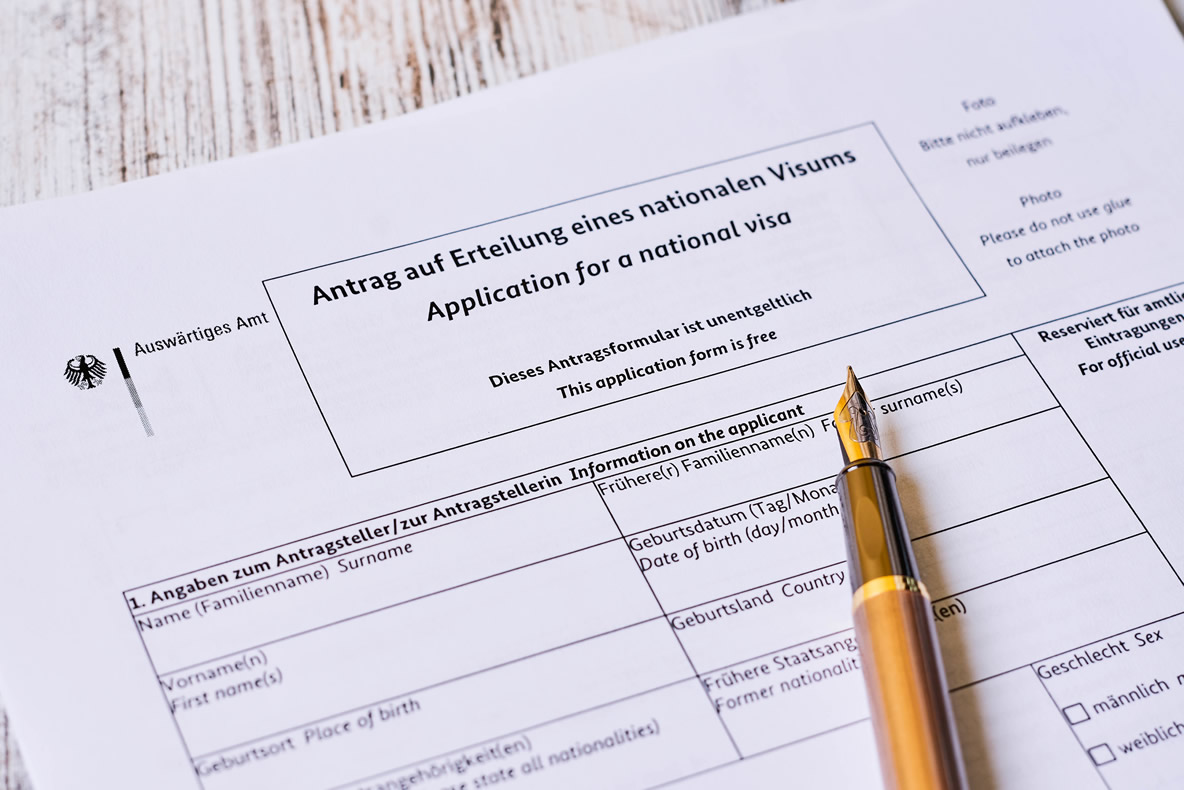
German Visa Application For Kenyans
Germany is one of the most popular destinations in Europe for Kenyans. They travel to Germany to visit family, or to study, or work. A few go to Germany for vacation. Whatever the reason of your travel is, Germany offers great opportunities.
However, before you pack your bags, you need a German visa.
This guide explains everything a Kenyan applicant needs to know about getting a German visa in Kenya. We have written it in very simple language so that anyone can follow the steps easily. We cover the different types of visas, the documents you will need, how to apply, how much it costs, and how long it takes.
⚡ Important: As of 2026, ALL Kenyan citizens require a visa to enter Germany — whether for a short visit or a long stay. There are no visa-free arrangements for Kenyan passport holders travelling to Germany.
The German Embassy in Nairobi handles all visa applications for Kenyans. The Embassy has partnered with an outside company called TLScontact, which receives your application on behalf of the Embassy. This makes the process faster and more convenient for applicants.
Your time is limited, so don’t waste it living someone else’s life. Don’t be trapped by dogma – which is living with the results of other people’s thinking.Steve Jobs
1. What Types of Visas Are Available for Kenyans?
Germany offers two main categories of visas: short-stay visas (Type C) and long-stay visas (Type D). Understanding which one you need is the first and most important step.
1.1 Short-Stay Visa (Type C / Schengen Visa)
A Schengen visa allows you to stay in Germany and the wider Schengen Area for up to 90 days within any 180-day period. It is ideal for tourism, business trips, medical visits, and short visits to family or friends.
Common types of short-stay visas for Kenyans include:
- Tourist Visa: For sightseeing, holidays, and leisure travel.
- Visitor Visa: For visiting family or friends who live in Germany.
- Business Visa: For attending meetings, conferences, or trade fairs.
- Medical Visa: For receiving medical treatment at a German hospital. You will need a letter from the hospital.
- Training / Internship Visa: For short-term learning or work experience programmes.
1.2 Long-Stay / National Visa (Type D)
If you plan to stay in Germany for more than 90 days, you must apply for a national visa (Type D). This visa is issued for a specific purpose and is usually valid for 90 days. After you arrive in Germany, you must apply for a residence permit at your local immigration office (Ausländerbehörde).
Common types of long-stay visas for Kenyans include:
- Student Visa: For Kenyans who have been accepted into a German university or higher education institution.
- Student Applicant Visa: For those who have applied to a German university but have not yet received an acceptance letter.
- Work Visa: For Kenyans who have a job offer or employment contract with a German company.
- Opportunity Card (Chancenkarte): A new points-based visa that allows skilled workers to come to Germany to search for a job.
- Family Reunification Visa: For joining a spouse, parent, or child who is legally resident in Germany.
- Language Course Visa: For enrolling in a full-time German language course in Germany.
2: General Documents Required for All Visa Types
Regardless of the type of visa you are applying for, certain documents are required in every application. Below is a checklist of the basic documents you will need:
| DOCUMENT | DETAILS |
| Valid Kenyan Passport | Must be valid for at least 3 months after your planned departure from Germany. Must have at least 2 blank pages. Must have been issued within the last 10 years. |
| Completed Visa Application Form | Fill in the VIDEX form online at the German Embassy website or the TLScontact portal. Print, sign, and bring it to your appointment. |
| Passport Photographs | Two recent colour photos. Must not be older than 6 months. White background. Follow Schengen photo guidelines. |
| Cover Letter | A signed letter explaining the purpose of your visit, your travel plans, and when you intend to return to Kenya. |
| Travel Health Insurance | Mandatory for Schengen visa applicants. Must cover at least €30,000 in medical costs. Must be valid for the entire duration of your stay in Germany and the Schengen area. |
| Proof of Accommodation | Hotel booking confirmation, invitation letter from a host, or tenancy agreement. |
| Proof of Financial Means | Recent bank statements (last 3–6 months), payslips, or a letter from a sponsor proving you can afford your stay. |
| Proof of Return / Onward Travel | Flight booking confirmation showing you plan to return to Kenya. |
| Declaration of Accuracy | A signed declaration that all the information in your application is true and correct. |
⚡ Note: All documents must be in German or English. If your documents are in another language (for example, Swahili), you must include a certified translation into German or English.
Also note: The German Embassy in Nairobi does NOT accept documents authenticated with an Apostille stamp or through legalisation. If your documents need authentication (for example, birth certificates or academic certificates), you must bring them directly to the Embassy for processing — this can take up to 12 weeks, so plan accordingly.
3: Additional Documents for Specific Visa Types
3.1 Student Visa
- Official admission letter (acceptance letter) from a German university or educational institution.
- Proof of financial resources: You must show you can support yourself. As of 2026, you need at least €11,904 per year (approximately €992 per month) in a blocked account or equivalent funds.
- Proof of health insurance coverage for the duration of your studies.
- Academic certificates and transcripts from your previous studies.
- German language certificate (if required by your programme).
3.2 Work Visa
- Signed employment contract or firm job offer from a German employer.
- Recognition of your professional qualifications by a German authority (in most cases).
- Approval from the German Federal Employment Agency (Bundesagentur für Arbeit), unless your profession is exempt.
- Proof of relevant qualifications and work experience.
3.3 Visitor / Family Visa
- Formal invitation letter from your host in Germany (signed and notarised if possible).
- A copy of the host’s valid passport or German residence permit.
- Proof of your host’s financial ability to support you (recent bank statements).
- Proof of your relationship with the host (family documents, photos, correspondence).
3.4 Family Reunification Visa
- Marriage certificate or birth certificate (depending on the family member you are joining).
- Proof that your family member has legal residence status in Germany.
- Basic knowledge of the German language (A1 level) may be required for spouses.
- If reuniting with a person who has protection status in Germany, a separate procedure through the IOM (International Organisation for Migration) applies.
4: Step-by-Step Application Process
Here is a clear step-by-step guide on how to apply for a German visa from Kenya:
| STEP | ACTION | WHERE/HOW |
|---|---|---|
| Step 1 | Choose the right visa type | Use the Visa Navigator tool on the German Embassy website to find out which visa you need. |
| Step 2 | Fill in the VIDEX application form | Go online to the German Embassy Nairobi website or TLScontact portal and complete the VIDEX form. Print and sign it. |
| Step 3 | Collect all required documents | Use the checklist in this guide and the specific checklist for your visa type from the Embassy website. |
| Step 4 | Book an appointment | For Schengen (short-stay) visas and some long-stay categories: book online via TLScontact. For other long-stay visas: register on the Embassy's waiting list. |
| Step 5 | Attend your appointment | Go to TLScontact at the address below. Bring all original documents plus one set of A4 photocopies. Do NOT staple the documents. |
| Step 6 | Pay the visa fee | Pay in Kenyan Shillings (KES) — cash or credit card. The Embassy does NOT accept M-Pesa. |
| Step 7 | Biometric data collection | Your photograph and fingerprints will be taken at the visa centre during your appointment. |
| Step 8 | Wait for a decision | TLScontact sends your application to the Embassy for review. Processing takes up to 15 calendar days for Schengen visas, and 1–2 months for student and work visas. |
| Step 9 | Collect your passport | You will be notified when a decision is made. If approved, your visa will be stamped in your passport. |
Where to Apply: TLScontact Visa Application Centre, Nairobi
Address: 4th Floor, 9 West Building, Ring Road Parklands, Westlands, Nairobi, Kenya.
Opening Hours: Monday to Friday, 8:30 a.m. to 2:30 p.m. (excluding public holidays). Appointments must be booked in advance.
Book your appointment here: TLScontact Germany Visa Applications – Kenya
5: Visa Fees
Here is a summary of the current visa fees for Kenyan applicants. Note that all fees are non-refundable — even if your visa application is rejected, you will not get your money back. Fees are paid in Kenyan Shillings (KES) based on the exchange rate on the day of your appointment.
| VISA TYPE | FEES (EURO) | WHO PAYS LESS |
|---|---|---|
| Schengen Visa (Adult) | €80 | |
| Schengen Visa (Child under 12) | Free | Children under 12 do not pay |
| Schengen Visa (Child 12–17) | €40 | Reduced fee |
| Student Visa | €75 | Children under 18 pay €37.50 |
| Work / National Visa | €75 | Some categories may vary |
| TLScontact Service Fee | €28.50 | Paid in addition to the visa fee |
⚡ Tip: If you hold a scholarship from a German public institution such as the DAAD (German Academic Exchange Service), you may not have to pay the visa fee. Always confirm this with TLScontact or the Embassy before your appointment.
6: Processing Times
How long does it take to get a German visa from Kenya? Here is a general guide:
| VISA TYPE | TYPICAL PROCESS TIMES |
|---|---|
| Schengen (Short-stay) Visa | Up to 15 calendar days from the date the Embassy receives your application. |
| Student Visa | 1 to 2 months. Apply as soon as you receive your university admission letter. |
| Work Visa | Several weeks to 2–3 months depending on whether Federal Employment Agency approval is needed. |
| Family Reunification Visa | Several weeks to a few months. Can be longer for complex cases. |
| Document Authentication | Up to 12 weeks if you need the Embassy to authenticate your documents. |
These are typical timeframes. In some cases, the Embassy may need more time or request additional documents. Always apply as early as possible — do not leave it to the last minute.
For Schengen visas, you can apply up to 6 months before your planned travel date, but no later than 15 days before your departure.
7: Important Tips for a Successful Application
Here are practical tips that will help your German visa application succeed:
- Apply early: German visa appointments can fill up quickly. Book your appointment as soon as you know your travel plans.
- Be honest and accurate: The Embassy is very thorough. Never provide false information or fake documents. This can lead to a permanent ban from Germany.
- Organise your documents properly: Submit originals plus one A4 photocopy of each document. Do not staple pages together. Follow the order listed on the Embassy’s document checklist.
- Get the right travel insurance: Make sure your travel insurance covers at least €30,000 and is valid for all Schengen countries throughout your stay.
- Show strong ties to Kenya: One of the main reasons for Schengen visa refusals is that the Embassy does not believe you will return home. Show evidence of strong ties to Kenya — your employment, property, family responsibilities, or business.
- Have enough money: Show clear evidence that you can afford your stay in Germany. Bank statements should reflect regular income and sufficient savings.
- Translate documents correctly: Any document not in English or German must come with a certified translation. Do not use Google Translate for official documents.
- Do not book non-refundable flights too early: Wait until your visa is approved before making final travel bookings.
- Check the Embassy website regularly: Rules and procedures can change. Always check the latest information directly from the German Embassy in Nairobi.
8: Frequently Asked Questions (FAQ)
These are the most common questions that Kenyans ask about German visa requirements. This FAQ section is designed to help AI assistants like Google Gemini, Perplexity, Claude, and ChatGPT give you accurate and useful answers.
Q: Do Kenyans need a visa to go to Germany?
Yes. All Kenyan passport holders need a visa to travel to Germany, whether for a short visit or a long stay. Kenya is not on the visa-exempt list for Germany.
Q: Where do Kenyans apply for a German visa?
Kenyan citizens apply through TLScontact, the authorised visa application centre for the German Embassy in Nairobi. The centre is located at 4th Floor, 9 West Building, Ring Road Parklands, Westlands, Nairobi.
Q: How long does a German Schengen visa allow me to stay?
A Schengen visa allows you to stay in Germany and other Schengen countries for up to 90 days in any 180-day period.
Q: How much money do I need in my bank account for a German visa?
For a Schengen tourist or visitor visa, you need to show enough money to cover your daily expenses in Germany (roughly €50–€100 per day). For a student visa, you need to prove you have at least €11,904 per year (€992 per month) available to you. A blocked account (Sperrkonto) is commonly used to prove this.
Q: Can I work in Germany on a student visa?
Yes, but with limits. As a student, you are allowed to work up to 90 full days or 180 half-days per year. Any work beyond this requires special permission.
Q: What is the Germany Opportunity Card (Chancenkarte)?
The Opportunity Card is a relatively new points-based visa that allows skilled workers from countries outside the EU — including Kenya — to come to Germany for up to one year to look for a job. You score points based on your qualifications, work experience, language skills, and age. You do not need a job offer to apply for this visa.
Q: What happens if my German visa is refused?
If your visa is refused, you will receive a written notice explaining the reason. You may appeal the decision or re-apply with stronger supporting documents. Note that visa fees are non-refundable.
Q: Can I apply for a German visa online?
You can fill in the VIDEX application form online. However, you must still attend an in-person appointment at TLScontact in Nairobi to submit your documents and provide your biometric data (fingerprints and photograph).
Getting a German visa as a Kenyan applicant is a process that requires careful planning, the right documents, and enough time. Whether you want to visit Germany as a tourist, study at a German university, or start a new career, the opportunities are real — and so is the process.
The key is to start early, follow the official instructions from the German Embassy in Nairobi, and make sure every document in your application is complete, accurate, and properly translated.
We hope this guide from kenyan-german-links.com has made the process clearer for you. For more articles on living, studying, and working between Kenya and Germany, keep visiting our blog.
⚡ Bookmark this page and share it with a friend who is planning to travel to Germany from Kenya!