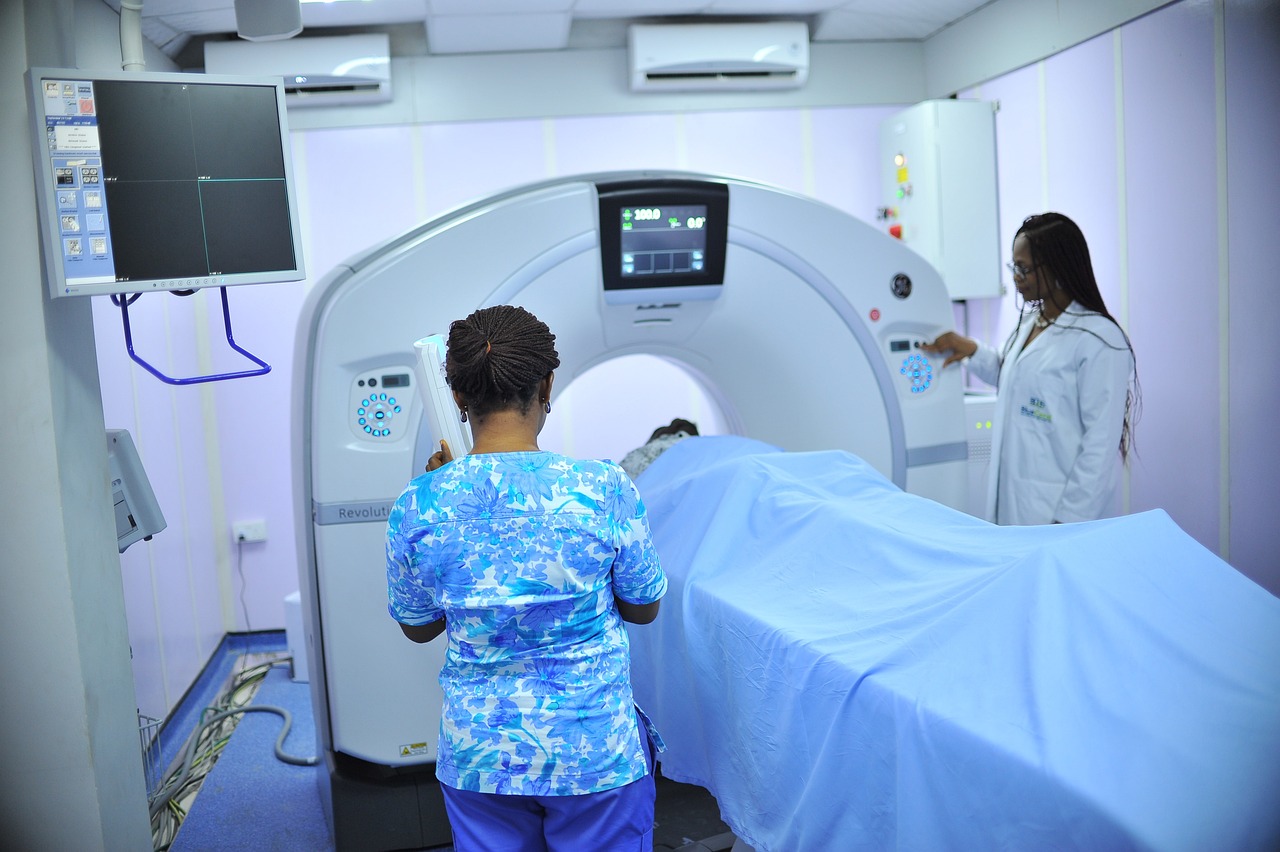
Germany, Europe’s power-house, is facing one of the most serious nursing shortages in its history.
According to Germany’s Federal Statistical Office, the number of people needing care will rise to as many as 8.2 million by 2055. To meet this demand, Germany needs at least 150,000 additional nurses by 2040 — and its own population simply cannot supply enough qualified workers.
Meanwhile, Kenya has a large number of trained, registered nurses who face a tough job market at home. Youth unemployment in Kenya is high, nursing jobs are limited, and training costs are expensive. This creates a natural opportunity for Kenyan nurses to take their skills to Germany, where they are urgently needed.
The good news got even better in September 2024, when Kenyan President William Ruto and German Chancellor Olaf Scholz signed a bilateral skilled worker agreement in Berlin. The deal specifically covers healthcare, including nurses and caregivers. This has opened more official doors for Kenyan health professionals to work legally and safely in Germany.
This guide will take you through every step of the process — from checking if you qualify, to getting your credentials recognised, to landing a job and obtaining your visa.
Quick Note: The German word for credential recognition is “Anerkennung” (pronounced ah-ner-KEN-nung). You will see this word a lot throughout the process.
Who Can Apply? Basic Eligibility Requirements
Before you begin the process, make sure you meet the basic requirements. Germany is clear about who is eligible to apply for nursing credential recognition
| REQUIREMENTS | DETAILS |
|---|---|
| Nursing Qualification | A diploma or degree in nursing from a recognised Kenyan institution |
| Nursing Licence | You must be a registered nurse with the Nursing Council of Kenya (NCK) |
| German Language | Minimum B2 level on the Common European Framework of Reference (CEFR) |
| Age | Most recruitment programmes prefer nurses aged between 21 and 42 years |
| Work Experience | At least 1–2 years of clinical experience is strongly preferred |
| Criminal Record | You must have a clean criminal record from Kenya (certificate of good conduct) |
| Health | You must be physically fit for nursing work (a medical certificate may be required) |
Important: You do not need to already be in Germany, or have German citizenship, to begin the recognition process. You can start the application from Kenya.
Understanding the German Nursing System
German nursing is a regulated profession. This means that you cannot legally call yourself a nurse in Germany, or work as one, without official government permission. The German title for a registered nurse is “Pflegefachperson” (or Pflegefachfrau/Pflegefachmann).
Since January 1, 2025, all nursing recognition procedures in Germany follow the new Nursing Professions Act (Pflegeberufegesetz – PflBG). Under this new law, assessment is now based on competencies — what you can actually do — rather than just comparing the number of training hours. This is a positive change, because it better reflects the real-world skills that Kenyan nurses bring.
The recognition process is managed by each of Germany’s 16 federal states (Bundesländer) separately. This means the office you apply to, the fees you pay, and how long processing takes may differ slightly depending on which state you plan to work in.
Popular German states for international nurses include:
| STATE | RECOGNITION AUTHORITY | NOTES |
|---|---|---|
| North Rhine-Westphalia | Bezirksregierung Düsseldorf | High volume of nurse jobs |
| Bavaria | Regierung von Oberbayern | Streamlined digital portal |
| Berlin | Senatsverwaltung für Gesundheit | Fast urban hospital processing |
| Baden-Württemberg | Regierungspräsidium Stuttgart | Strong elderly care sector |
Step-by-Step: The Full Credential Recognition Process
STEP 1: Get Your German Language to B2 Level
This is the most important first step and often the longest part of the journey. You must prove you can speak and understand German at B2 level before the recognition process can be completed.
The levels go from A1 (absolute beginner) to C2 (near-native). For nursing in Germany, B2 is the minimum. Some states or employers may also require you to pass a specialist nursing language examination to prove you can handle medical German — such as patient communication, clinical documentation, and nursing terminology.
How to achieve B2 German in Kenya:
Several organisations offer German language training right here in Kenya:
- AG German Institute — Offers nursing-specific German language programmes in Nairobi, Eldoret, Kisumu, Kisii, Nakuru, and Mombasa. Courses run from A1 through B2. (Visit: germaninstitute.co.ke)
- Goethe Institut Nairobi — The official German cultural institute. Offers certified language testing accepted across Germany. (Visit: goethe.de/nairobi)
- Mount Kenya University (MKU) — Runs a German language and nursing preparation programme in partnership with Koblenz University of Applied Sciences in Germany.
Typical course timeline:
- A1: ~2 months
- A2: ~2 months
- B1: ~2 months
- B2: ~3 months
Total: approximately 9 months to go from zero German to B2.
STEP 2: Gather Your Documents
This is one of the most critical steps. Incomplete or incorrect documents cause the majority of delays in the Anerkennung process. Take time to prepare your documents carefully.
Here is a complete list of what you will likely need:
| DOCUMENT | DETAILS |
|---|---|
| Valid Passport | Must include all personal details in Latin characters |
| Nursing Diploma/Degree Certificate | Your original academic certificate from your nursing school |
| Academic Transcripts | Detailed records of subjects studied and grades obtained |
| Clinical Training Records | Proof of clinical hours and placements during training |
| Nursing Licence (NCK) | Your current registration certificate from the Nursing Council of Kenya |
| Certificate of Good Conduct | Obtained from the Directorate of Criminal Investigations (DCI) in Kenya |
| Curriculum Vitae (CV) | Written in German, tabular format, signed and dated |
| Letter of Motivation | Explaining your intent to work in Germany and your career goals |
| Proof of Language Proficiency | Your B2 language certificate (e.g. Goethe-Zertifikat B2) |
| Proof of Work Experience | Reference letters from previous employers (translated into German) |
| Medical Certificate | Proof that you are physically fit for nursing work |
Translations: All documents that are not in German must be translated by a certified/sworn translator (öffentlich bestellter Übersetzer). Do not use Google Translate or unofficial translators. The German authorities will reject documents that are not properly translated.
Apostille: Some documents — especially your academic certificates and nursing licence — may need to be apostilled (officially certified) by the Kenyan government through the Ministry of Foreign Affairs before they are accepted in Germany.
STEP 3: Find the Right Competent Authority (Zuständige Behörde)
Because Germany is divided into 16 states, you need to apply to the correct authority in the state where you plan to work.
Use the official “Recognition Finder” tool on the German government’s portal to find the right office for your profession and location:
🔗 www.anerkennung-in-deutschland.de
On this portal:
- Select your profession (General Nurse / Pflegefachperson)
- Enter the town or postcode where you want to work
- Select “Third Country” as your qualification origin
- The system will tell you exactly which office to contact
You can submit your application documents by post, in person, or electronically (depending on the state). Do not send original documents — always send certified copies.
STEP 4: Submit Your Application and Pay the Fee
Once you have all your documents and you know your competent authority, submit your application for the “Erteilung der Erlaubnis zum Führen der Berufsbezeichnung” — which means “Permission to use the professional nursing title.”
Processing fees vary by state but typically range from €100 to €250.
After submission, the competent authority will:
- Check that all your documents are present and in order
- Compare your Kenyan nursing qualification with the German standard
- Issue a formal Recognition Notice (Anerkennungsbescheid)
Processing time: Typically 3–4 months if all documents are complete.
STEP 5: Understand Your Recognition Outcome
There are three possible outcomes when the authority reviews your application:
1. Full Recognition (Vollständige Anerkennung) Your qualification is found to be equivalent to the German standard. You receive full permission to work as a registered nurse. This is the best possible outcome.
2. Partial Recognition / Deficit Notice (Defizitbescheid) The authority finds some gaps between your training and German standards. This is the most common outcome for non-EU nurses, affecting around 45–85% of applicants. Common gaps identified for Kenyan nurses often include German nursing law, pharmacology standards, hygiene protocols, and geriatric care modules. You will receive a written notice that clearly lists the specific gaps you need to close.
3. Rejection This is rare — in 2024, only 1% of applications were rejected. If this happens, you have the right to appeal within 30 days.
STEP 6: Complete the Compensation Measures (If Required)
If you receive a Deficit Notice, don’t worry. This is a normal part of the process. You will need to complete one of two compensation measures to close the identified gaps:
Option A: Knowledge Test (Kenntnisprüfung) This is a written and/or practical exam that tests the specific areas where gaps were found. You prepare for this exam either on your own or through a preparation course. Many nurses who have good study habits prefer this option because it can be completed faster — sometimes in 3–4 months of preparation.
Option B: Adaptation Period (Anpassungslehrgang) This is supervised practical work in a German healthcare facility, lasting between 3 and 36 months depending on the size of your qualification gaps. During this period:
- You work as a nursing assistant under a restricted license
- You earn a salary of approximately €2,200–€2,800 gross per month
- You receive mentoring and on-the-job training
- No final examination is required at the end
Most Kenyan nurses who come through employment programmes complete the adaptation period because it allows them to start working and earning from day one, while completing their recognition at the same time.
Good to know: You can enter Germany on a work visa to complete your compensation measures even before full recognition is granted. This is called the “Accelerated Skilled Worker Procedure” (Beschleunigtes Fachkräfteverfahren) and was strengthened under the 2024 Skilled Immigration Act reforms.
STEP 7: Obtain Full Recognition and Your Professional License
Once you pass the knowledge test or complete the adaptation period, the competent authority will issue your full professional recognition. You are now legally authorised to work as a fully registered nurse (Pflegefachperson) in Germany.
At this stage, you will also need to register with the local health authority (Gesundheitsamt) in the area where you live, to finalise your professional licensing.
STEP 8: Apply for Your Work Visa
Credential recognition and the work visa are two separate processes that often run at the same time or in sequence.
For Kenyan nurses, there are two main visa routes:
Option 1: Work Visa for Qualified Professionals (§18a AufenthG) This applies when you have full recognition AND a confirmed job offer. This is the standard route.
Requirements:
- Full credential recognition from the German authority
- A concrete employment contract from a German employer
- B2 German language certificate
- Valid Kenyan passport
Option 2: Recognition Partnership Visa (§16d AufenthG) — Available since March 2024 This is a newer and very helpful option for Kenyan nurses. It allows you to enter Germany first, and complete the recognition process after arrival. Your future German employer must formally agree to support the recognition process alongside you. This means you do not have to wait for full recognition before coming to Germany.
Apply for your visa at the German Embassy in Nairobi:
🔗 German Embassy Nairobi — Visa Section Address: Ludwig-Krapf-Str. 4, Nairobi, Kenya Website: nairobi.diplo.de
Note: The EU Blue Card does not apply to nursing professionals. Always apply under the skilled worker or recognition partnership visa categories.
The Recognition Partnership: A Newer, Smarter Route
Since March 2024, there is a very practical option called the “Anerkennungspartnerschaft” (Recognition Partnership). This was introduced as part of Germany’s updated Skilled Immigration Act.
Under this arrangement:
- You and your German employer agree in writing to pursue the recognition process together
- You can come to Germany on a residence permit before your recognition is complete
- You begin working — usually as a nursing assistant — immediately upon arrival
- The recognition process is completed while you are already living and working in Germany
This is the route that most Kenyan nurses are now using, especially those coming through recruitment agencies and employer-sponsored programmes.
Requirements for the Recognition Partnership:
- You have completed at least 2 years of nursing training
- Your qualification is officially recognized by the government in Kenya (Nursing Council of Kenya registration)
- A German employer formally commits to supporting the process
Recruitment Programmes Specifically for Kenyan Nurses
You do not have to navigate this process alone. Several programmes and organizations actively recruit and support Kenyan nurses throughout the entire journey.
1. AG German Institute / AG CareerHub
Based in Nairobi, this institute runs a nursing preparation programme that combines German language training with nursing skills preparation. They have active partnerships with German hospitals and have already placed multiple cohorts of Kenyan nurses in Germany, including at Caritas Bad Mergentheim and other facilities.
🔗 germaninstitute.co.ke | ag-careerhub.com
2. Make it in Germany (Official German Government Portal)
The official German government’s portal for international skilled workers. Includes detailed, up-to-date information on nursing recognition, visa processes, and living in Germany.
3. Anerkennung in Deutschland (Official Recognition Portal)
The official recognition finder tool of the German federal government. Use this to find your correct authority, check requirements, and navigate the recognition process.
🔗 anerkennung-in-deutschland.de
4. TERN Group
An international healthcare recruitment company that helps nurses from Africa and Asia find nursing jobs in Germany, including full support for the Anerkennung process.
How Long Does the Whole Process Take?
This is one of the most common questions. Here is a realistic timeline for a Kenyan nurse starting from scratch:
| PHASE | APPROXIMATE DURATION |
|---|---|
| German Language Training (A1 to B2) | 9–12 months |
| Document Collection and Translation | 1–2 months |
| Application Submission and Authority Assessment | 3–4 months |
| Compensation Measures (if required) | 3–36 months |
| Visa Processing | 2–4 months |
| Total (End-to-End) | Approximately 12–24 months |
The fastest documented case for a well-prepared applicant was 9 months from first application to full recognition. The average is around 12–18 months.
What Are the Costs?
For the nurse: In employer-sponsored and recruitment-agency programmes (such as Deraja and AG German Institute), most or all costs are covered by the German employer. You should never pay a recruitment fee to any agency claiming to place you in Germany. This is a violation of ethical recruitment standards.
Under the “Fair Recruitment Healthcare Germany” quality seal, reputable employers and agencies commit to:
- Covering relocation costs
- Paying for or reimbursing language training
- Paying your salary during the adaptation period
- Supporting the visa application process
Self-funded applicants should budget for:
| COST ITEM | ESTIMATED AMOUNT |
|---|---|
| German Language Courses (A1–B2) | KES 30,000–60,000 (varies by provider) |
| Document Translation and Apostille | KES 20,000–40,000 |
| Recognition Application Fee | €100–€250 (approximately KES 15,000–38,000) |
| Visa Application Fee | €75 (approximately KES 11,500) |
| Travel to Germany | KES 80,000–120,000 (one-way) |
Frequently Asked Questions (FAQ)
Q: Do I need the NCLEX exam to work as a nurse in Germany? A: No. Unlike the United States, Germany does not require the NCLEX exam. The Anerkennung (credential recognition) process is Germany’s own route to professional licensing.
Q: Can I start the recognition process from Kenya, or must I be in Germany? A: You can start from Kenya. However, since March 2024, there is also a Recognition Partnership option that allows you to come to Germany first and complete the process after arrival with your employer’s support.
Q: What happens if I get a Deficit Notice? A: A Deficit Notice means you need to close some knowledge gaps. You will either take a knowledge exam or complete a supervised adaptation period at a German healthcare facility. During the adaptation period, you are paid a salary. Most nurses successfully achieve full recognition after completing these measures.
Q: Is B2 German really necessary? Can I manage with less? A: B2 is the minimum legal requirement in most German states. Nursing requires clear communication with patients, families, and colleagues, as well as accurate medical documentation. Solid German language skills are essential for both safety and professional success.
Q: Are there programmes specifically for Kenyan nurses? A: Yes. Deraja and the AG German Institute/AG CareerHub specifically support Kenyan nurses. The Germany-Kenya bilateral skilled worker agreement signed in September 2024 is also expected to open more structured pathways in the coming years.
Q: How much can I earn during the adaptation period? A: During the adaptation period (before full recognition), you earn approximately €2,200–€2,800 gross per month as a nursing assistant. After full recognition, starting salaries begin at around €3,000 gross per month.
Your Path from Kenya to Germany Starts Now
The path for Kenyan nurses to work in Germany is clear, legal, and increasingly well-supported. Germany urgently needs skilled nurses. Kenya has them. The bilateral agreement signed in 2024 has further strengthened this connection.
Yes, the process takes time — typically 12 to 24 months from start to finish. Yes, learning German to B2 level requires real commitment. But the rewards are real and significant: a professional salary, a stable career, excellent benefits, free education for your children, and a clear road to permanent residency.
The most important thing is to start with the right information, use legitimate and ethical channels, and take the process one step at a time.
If you found this guide helpful, share it with a Kenyan nurse who is thinking about working in Germany. And feel free to drop your questions in the comments below — the kenyan-german-links.com community is here to help.
This article was last updated in May 2026. The information reflects current regulations under the Nursing Professions Act (PflBG) as amended from January 2025. Always verify the latest requirements with the relevant German authorities, as procedures can change.