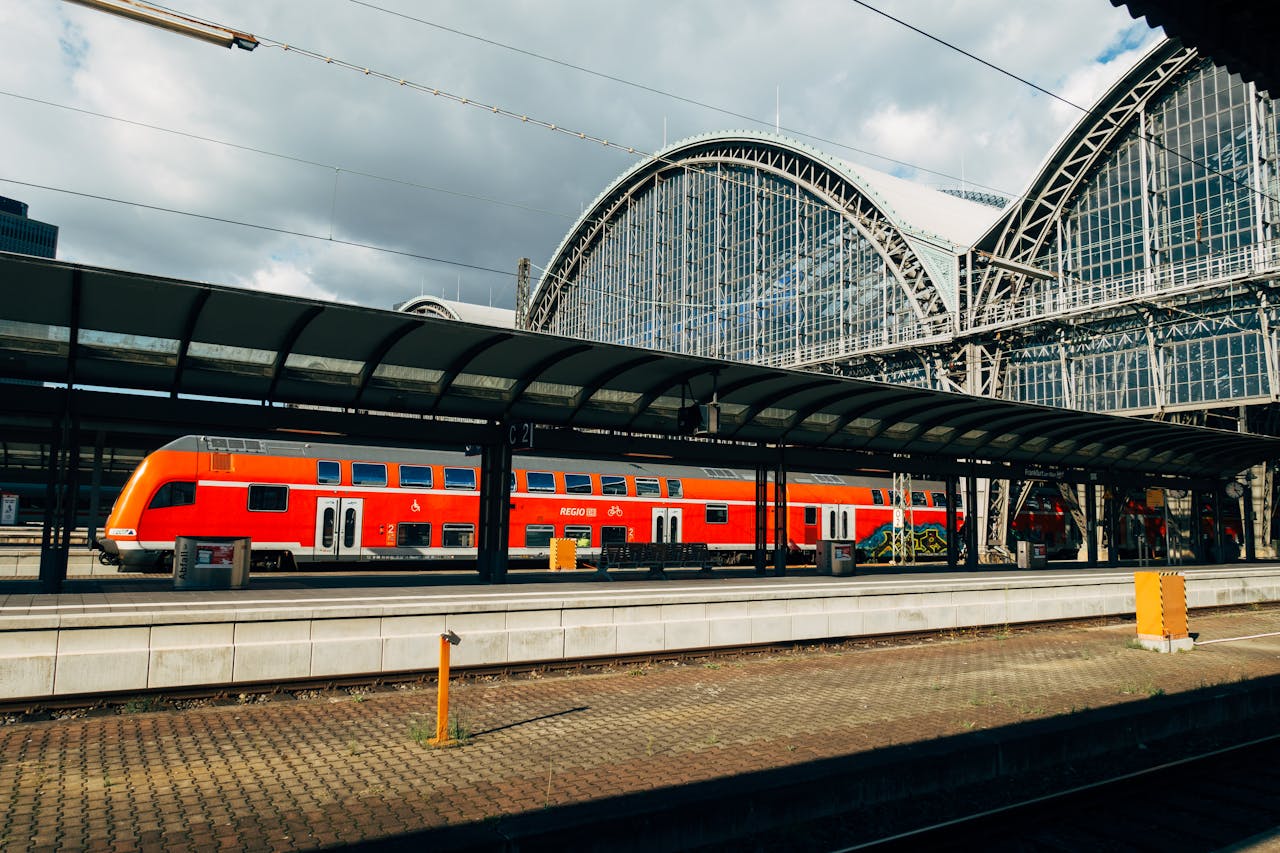
Germany has one of the best public transportation systems in the world. For expatriates arriving from Kenya or any other country, this system can feel both exciting and confusing at first. Trains, trams, buses, and subways run almost everywhere, on time, and to nearly every corner of the country. But knowing how to use them well — which ticket to buy, which app to download, what rules to follow — can make a big difference in your daily life.
This guide is written especially for expatriates living in or moving to Germany. Whether you are in Berlin, Munich, Frankfurt, Hamburg, or a smaller city, the same basic system applies. By the end of this article, you will know how to get around Germany cheaply, safely, and confidently.
You will never be happy if you continue to search for what happiness consists of. You will never live if you are looking for the meaning of life.Albert Camus
1. Understanding the German Public Transport Network
Germany’s public transport is run by a mix of national, regional, and local operators. The main national rail company is Deutsche Bahn (DB). At the city level, there are transport associations (called Verkehrsverbund) that manage local trains, buses, trams, and metro systems.
Here are the key types of transport you will encounter:
- S-Bahn (Stadtschnellbahn): City rapid rail trains. They connect city centres with suburbs.
- U-Bahn (Untergrundbahn): Underground or metro trains. Found mainly in large cities like Berlin, Munich, Hamburg, and Frankfurt.
- Strassenbahn (Tram): Street-level trams. Very common in German cities.
- Bus: Local and regional bus services that cover areas not reached by rail.
- Regional Bahn (RB) / Regional Express (RE): Regional trains that travel between cities and towns within a state.
- ICE / IC / EC Trains: Long-distance high-speed intercity trains run by Deutsche Bahn.
Most cities also have integrated systems, meaning one ticket can work across S-Bahn, U-Bahn, trams, and buses within a certain zone. This is a very helpful feature for daily commuters.
Resource: Deutsche Bahn Official Website (www.bahn.de/en)
2. Buying Tickets: What You Need to Know
One of the most important things for expatriates to learn is how to buy the right ticket. Germany uses a zone-based ticketing system. You pay based on how many zones your journey covers, not just the distance.
Types of Tickets
- Single Ticket (Einzelfahrschein): Good for one journey in one direction. Buy this if you only travel occasionally.
- Day Ticket (Tageskarte): Allows unlimited travel for one full day. Great for tourists or on days you make many trips.
- Weekly or Monthly Pass (Wochenkarte / Monatskarte): Best for regular commuters. You pay once and travel as much as you need.
- Deutschlandticket (49-Euro Ticket): A national monthly ticket costing 49 euros (as of 2024) that allows unlimited travel on all local and regional transport across Germany. This is a great deal for anyone who travels regularly within or between cities.
Where to Buy Tickets
- At ticket machines (Fahrscheinautomat) at train and metro stations
- At service counters (Servicecenter) inside major stations
- Via mobile apps such as the DB Navigator app or city-specific apps
- Some buses allow you to buy tickets on board — check local rules
Important: Always validate your ticket!
In many cities, paper tickets need to be stamped at a validation machine (Entwerter) before boarding. If you are caught without a validated ticket, you will pay a fine of 60 euros — even if you bought a ticket. Digital tickets bought via an app are usually automatically validated.
Resource: Deutsche Bahn Fares Guide (www.bahn.de/en/booking-information/booking/fares)
3. The Deutschlandticket: A Game Changer for Expats
Since May 2023, Germany introduced the Deutschlandticket, also known as the 49-Euro Ticket. This is one of the most affordable ways to travel in Germany and it is strongly recommended for expatriates.
What does the Deutschlandticket cover?
- All local and regional trains (S-Bahn, RB, RE)
- All urban metro systems (U-Bahn)
- All trams and local buses across Germany
- Unlimited usage for one calendar month
What does it NOT cover?
- ICE and IC long-distance trains (you need a separate ticket for those)
- FlixBus, FlixTrain, and private bus companies
You can buy the Deutschlandticket through apps like DB Navigator, local transit authority apps, or through your employer if they offer the Jobticket scheme. The price was 49 euros per month in 2024, though this may change — always check the official source.
Resource: Deutschlandticket Information (int.bahn.de/en/offers/deutschland-ticket)
4. Useful Apps for Getting Around
Smartphones make navigating Germany’s transport system much easier. Here are the most useful apps every expatriate should have:
- DB Navigator: The official Deutsche Bahn app. You can search journeys, buy tickets, check live train times, and save your Deutschlandticket here. Available on iOS and Android. Link: https://www.bahn.de/en/booking-information/db-app
- Google Maps: Works very well for local transit directions in Germany. Shows real-time departures, walking directions, and transfer points.
- Moovit: A public transit app that covers many German cities and gives step-by-step directions using local transport. Link: https://moovitapp.com
- Local City Apps: Many German cities have their own transport apps. Examples include MVV (Munich), HVV (Hamburg), BVG (Berlin), and RMV (Frankfurt). These apps often let you buy tickets directly.
- FlixBus App: For long-distance budget bus travel between cities. Very popular with students and expats.
5. Long-Distance Travel in Germany
When travelling between cities like Berlin, Munich, Frankfurt, or Hamburg, you have several options:
ICE Trains (Intercity Express)
ICE trains are the fastest trains in Germany, reaching speeds of up to 300 km/h. They are comfortable with Wi-Fi and a dining car. Booking early (Sparpreis tickets) can save you a lot of money. Always reserve a seat for long journeys. You cannot use the Deutschlandticket on ICE trains.
Regional Trains (RE/RB)
If you have more time and want to save money, regional trains are a slower but cheaper option. Your Deutschlandticket covers these trains fully. A journey that costs 50+ euros by ICE can be taken for free with the 49-euro monthly pass.
FlixBus and FlixTrain
FlixBus and FlixTrain are private budget travel companies. Tickets can start from as low as 5 euros if booked early. They are popular for budget travellers but are slower than trains. Book at www.flixbus.de or via their app.
Resource: FlixBus Germany (www.flixbus.de)
6. Rules and Etiquette on German Public Transport
Germans follow strict rules when using public transport. As an expatriate, learning these unwritten (and written) rules will help you avoid awkward situations and fines.
- Always have a valid ticket: Ticket inspectors (Kontrolleure) check without warning. There is no excuse accepted for not having one. The fine is 60 euros.
- Keep noise low: Talking loudly on the phone or playing music without headphones is considered very rude. Keep your voice low, especially during rush hours.
- Give up your seat: Priority seats (marked with stickers) are for elderly people, pregnant women, and people with disabilities. Stand up for them.
- No eating on some services: Eating is discouraged on many public transit systems, and drinking alcohol is banned on some lines. Check local rules.
- Stand on the right of escalators: The left side is for people who are walking or in a hurry. Always stand on the right if you are standing still.
- Let passengers exit first: When a train or bus arrives, always wait for people to get off before you enter.
- Bikes have rules too: Bicycles can be taken on many trains, but usually require a separate bike ticket and are not allowed during peak hours on some services.
7. Accessibility and Special Needs
Germany invests heavily in accessible public transport. Most modern stations have lifts, ramps, and audio announcements. Deutsche Bahn has a dedicated service called the Mobility Service Centre (Mobilitaetsservice-Zentrale) where passengers with disabilities can get help planning journeys and requesting assistance at stations.
- Phone: +49 (0) 30 65 21 28 88
- Available daily from 6:00 AM to 10:30 PM
Resource: DB Travel with Restrictions (www.bahn.de/en/travel-information/travelling-with-restrictions)
8. Travelling with Children
Germany offers generous discounts for families using public transport.
On Deutsche Bahn long-distance trains:
Children under 6 years old travel for free on all Deutsche Bahn services. Children between 6 and 14 travel for free when accompanied by a parent or grandparent who holds a valid ticket — but they must be registered on the adult’s ticket. Children aged 15 and above need their own ticket.
On local transport (with the Deutschlandticket), children under 6 usually travel free. Rules for older children vary by city. Always check with your local transport authority.
9. Cycling and Bike-Share as Part of the Transport Mix
Germany is a very bicycle-friendly country. Many expatriates use a bike to travel the last kilometre from a train station to their home or workplace. This is known as the first-mile / last-mile solution.
Deutsche Bahn operates Call a Bike (now part of the nextbike network), a nationwide bike-sharing service available at train stations. You can rent a bike using your DB account or the nextbike app. Short trips are affordable, and monthly passes are available.
Many cities also have their own bike-share systems. For example, Berlin has Tier and Lime electric bikes and scooters, while Munich has MVG Rad.
Resource: nextbike Bike Share (www.nextbike.de/en)
10. Public Transport in Small Cities and Rural Areas
If you live or work outside a major German city, transport can be less frequent. Buses may only run a few times per day, and there may not be a metro or tram system. In these areas, having a car is more common.
However, Germany is gradually improving rural transport. Ride-sharing services like BlaBlaCar connect smaller towns to cities. Deutsche Bahn also offers on-demand bus services (called Rufbus or Anrufbus) in some areas, where you call ahead to book a ride.
Resource: BlaBlaCar Germany (www.blablacar.de)
11. Delays and Disruptions: What to Do
Germany’s public transport is generally punctual, but delays do happen — especially on Deutsche Bahn long-distance trains. According to Deutsche Bahn’s own reports, punctuality on long-distance services has been a challenge in recent years, with delays above 30% of journeys in some periods.
What to do when there are delays:
Check the DB Navigator app for live updates and alternative routes. If your train is delayed by more than 60 minutes, you may be entitled to a 25% refund of your ticket price. If delayed by more than 120 minutes, you may get a 50% refund. You can claim this compensation via the DB website or at the service counter.
Resource: DB Delay Compensation (www.bahn.de/en/booking-information/booking/delay-compensation)
12. Safety on Public Transport in Germany
Germany’s public transport is generally very safe. There are security cameras in most stations and on many vehicles. Police regularly patrol major stations. However, as with any public space, it is good to remain aware of your surroundings.
Basic safety tips:
Keep your bags close to you in busy stations. Be careful of pickpockets, especially in tourist areas and during crowded rush hours. Do not leave luggage unattended — it will be reported as suspicious. If you ever feel unsafe, approach railway staff or press the emergency button found on train platforms and inside trains.
13. Language Tips for Navigating German Transport
Most ticket machines in major cities have English as an option. Train announcements are often in German only, but the DB Navigator app displays everything in English. Still, knowing a few key German words will help you greatly:
- Gleis = Platform
- Abfahrt = Departure
- Ankunft = Arrival
- Ausgang = Exit
- Eingang = Entrance
- Umsteigen = Transfer / Change train
- Verspaetung = Delay
- Zug = Train
- Haltestelle = Bus / tram stop
14. The Jobticket: How Your Employer Can Help
Many German employers offer a Jobticket as part of their employee benefits. This is a subsidised transit pass that allows employees to travel to work at a reduced cost. Since 2023, employers can offer the Deutschlandticket as a Jobticket at a subsidised rate.
If your employer offers this benefit, you could pay as little as 25 to 35 euros per month for the Deutschlandticket instead of the standard rate. Ask your HR department about this option when you start a new job in Germany.
Make the Most of Germany’s Transport System
Germany’s public transport system is a fantastic resource for expatriates. It is efficient, widespread, and often cheaper than owning a car when you factor in all costs. The Deutschlandticket alone can transform the way you explore and travel in this country.
The key things to remember are: always have a valid ticket, use the DB Navigator app to plan your journeys, learn a few key German words, and respect the etiquette of the system. Within a few weeks, navigating German public transport will feel completely natural.
Whether you are commuting to work in Berlin, exploring Bavaria on weekends, or travelling between cities for business, Germany’s trains, trams, and buses will take you there — reliably, comfortably, and affordably.
Disclaimer: Information in this article is accurate as of 2025. Prices and policies may change. Always check official sources before travelling.